Onur Sönmez is a senior designer working on the next generation human-machine interfaces and interactions, specialized in research-driven design.
[mail - at - onursonmez.com]
[linkedin]
Client List & Exhibitions
BMW, MINI, Rolls-Royce, Audi, Alpina, Lotus, Honda, Bosch, Siemens, LMU, Turkcell, Sony BMG, EMI Music, Ars
Electronica
Selected Exhibitions: Bauhaus Dessau, Pinakothek der Moderne, Kunsthaus Graz, 11. Venice Biennale of
Architecture, Sonar Festival Istanbul, Ars Electronica Festival, Saatchi Gallery London, Llum Festival
Barcelona, Connecting Cities Network, Transmediale Berlin, Playlab Medialab Prado
Selected Projects
> *soon* Beacon - Bauhaus Dessau Centennial
Exhibition
> BMW - Kontrastmoment
> Audi - Head-Up Display
> Sunscriber - Kunsthaus Graz
> DOI - [Decode/Overlay/Intermodulate]
> Motogan
> UEFA Europa League AFC Ajax analysis for Galatasaray SK
> Hero ヘロ
> Bosch Design Studio
> NOX - Ars Electronica
> Prothesengott
> For older projects please use [this link].
> BMW - Kontrastmoment
> Audi - Head-Up Display
> Sunscriber - Kunsthaus Graz
> DOI - [Decode/Overlay/Intermodulate]
> Motogan
> UEFA Europa League AFC Ajax analysis for Galatasaray SK
> Hero ヘロ
> Bosch Design Studio
> NOX - Ars Electronica
> Prothesengott
> For older projects please use [this link].
BMW - Kontrastmoment (2014-2026)
If you would like to learn more about my automotive portfolio spanning the past 11 years, please feel free to contact me directly. I am happy to present my work personally, as I am unable to publicly share the full portfolio due to non-disclosure agreements with past and present clients.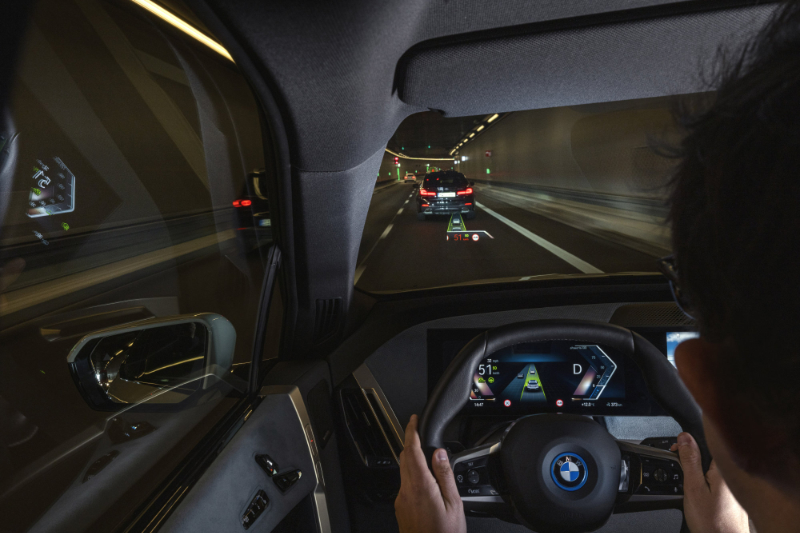
Audi - Head-Up Display
Between 2023 and 2026 I have worked on the design and the animation of Audi's next generation Head-Up Displays together with Iconincar and kontrastmoment. I can’t post or discuss about the projects because of my strict confidentiality agreement.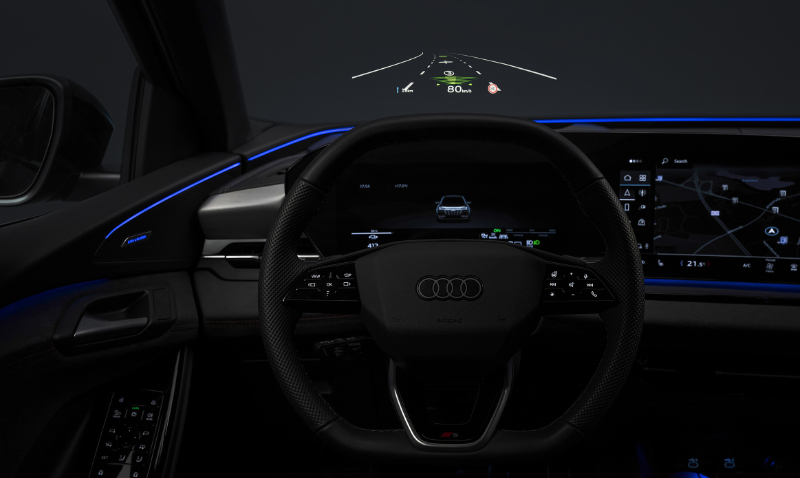
Sunscriber (2019 - 2021)
Kunsthaus Graz, Austria. 09 April 2021 - 24 November 2021 In the book A Friendly Alien Peter Cook and Colin Fournier define Kunsthaus Graz's BIX Facade as 'an experimental laboratory'. This project aims to actualize previously untapped experimental features of the Facade and integrate its exterior media display to a technological apparatus -which we call Sunscriber- powered by a system designed on the basis of sustainability principles. Given the fact that Styria province, which Graz is part of, has come up with its own Climate and Energy Action Plan for 2019-2021 (https://www.ea-stmk.at/kess-aktionsplan), the installment Sunscriber on one of Graz's major urban landmarks in 2021 re-emphasizes Kunsthaus Graz's unique architectural features and materially manifests this Action Plan's principles with respect to the development of numerous strategies "in terms of climate protection and adaptation to climate change." Sunscriber consists of three main design components: a set of photovoltaic cells installed on top of the Needle of the building, a computer program that will monitor the amount of energy collected by the photovoltaic cells, and the already existing illumination infrastructure of the BIX Facade consisting of 946 light bulbs and BIX Simulator. The computer program functions as a control interface and facilitates the visual renderings appearing on the exterior surface of the Facade. This control function treats the energy levels it detects on the photovoltaic cells as its referential index. The fundamental working principle of this integrated system is to regulate the energy used for the illumination of the Facade by the use of a solely solar activated infrastructure. The energy regulation features of the Sunscriber are coupled with the design interface and aesthetic features of what the Facade will be showing. Depending on the energy levels of a given day collected by the photovoltaic cell measures, the visual composition of what the Facade shows, i.e. its morphological contours and illumination brightness, and this show's timespan, i.e. the time length and frequency of the Facade's lights to stay on takes shape on a nightly basis. The fact that the lights of the Facade won't be on all night creates a striking effect on the people passing by the building but also Graz's nighttime urban silhouette. These possible interruptions on the material and symbolic expressions of Kunsthaus Graz via the BIX Facade provokes questions regarding alternative futures for the regulation of energy use by public landmarks, coming up with novel solutions to tackle with the light pollution urban landscapes radiate and new ways of articulating these questions with contemporary art, architecture and design practices. The socio-technical imaginary of this art project aims to link Kunsthaus Graz's architecture vision with particular threads from the history of scientific thought, technology and material culture as its name denotes. Sunscriber is basically an 'inscription device' (here we operationalize Bruno Latour's concept from his book Science in Action, 1987) that trans-mediates the materiality of sun beams into human scientific language with the dual use of an electronic infrastructure and digital media interface. It shows how much energy it harvested, how much energy it can still use, how long it will stay on based on the weather conditions of a given day. Kunsthaus Graz will be hosting it throughout 2021 as an appendage of its 'friendly alien' form. Sunscriber literally scribes the sun, records and screens its daily activities reaching Graz landscape on the BIX Facade while it harvests the energy to do such inscription from the same source. It's a simple, close-circuited system that unpacks a mundane -but vital- cosmological event, i.e. sunbeams reaching surface of the Earth in differential levels; and it treats the sunbeams as additional non-human actors that infuse the cells, wires and nozzles of a technological apparatus repurposed for an art project. Sunscriber takes its etymological roots from three distinct entities in the history of human material culture: a vocation (scribe), a hand-crafted tool (scriber), and a science-fictional space technology (sunjammer). First of all, scribes are known to be crucial literary workers for the cross-generational record-keeping and transmittance of written knowledge in social institutions especially before the widespread use of printing press in human civilizations. A scribe could have been a monk, a clerk, a typist, a bookkeeper. It's plausible to consider the ubiquitous computers of our times -and the technological systems they are embedded in- as contemporary scribes including the Sunscriber. Secondly, a scriber is a hand-crafted metal tool used to leave temporary marks on the hard surface of an object that is given modeled, casted, sculpted or shaped in a regular workshop. Historically, it has been an indispensable tool for a carpenter or metal worker, especially those that didn't have the means to use machinic devices for leaving inscribed marks on their work objects. Scribers are better alternatives to pencils and ink lines due to their precision and handiness. And the marks they leave on a hard surface fade out as part of a natural process. Since the inscriptions on the BIX Facade made by the Sunscriber fade out when the apparatus runs out of energy, can we imagine it to be a digital scriber? And finally, sunjammer was a semantic invention of the 20th century science fiction writer Arthur C. Clarke -and the title of his short story from 1964- that denoted the spacecrafts sailing in deep space thrusted by the energy provided from their solar panels. Not only NASA considered naming one of their space missions after Clarke's space sailboats in 2015 but solar panels have played -and still do- a pivotal role in the design and manufacturing of satellite and spacecraft technologies since the early days of Cold War Space Race. In this project, we re-imagine the Kunsthaus Graz's 'friendly alien spaceship' features in the aesthetic form and technical function of a scriber rather than a jammer. Sunscriber doesn't jam, squeeze or pack the sun beams for militaristic or telecommunicative purposes but unpacks, expands and retranslates them for the material manifestation of its socio-technical imaginary. It refurbishes the alien spaceship it is hosted by for a cultural and ecological purpose. The semantic attributions of the Sunscriber evoke a set of conceptual questions concerning the troubling times we live in the early 21st century. To what extent can the widespread use of alternative energy technologies -like the photovoltaic cells that this project deploys- could mitigate the damaging consequences of the Anthropocene in the upcoming decades unless we change our material production and consumption practices? In what other creative ways can we repurpose the contemporary digital scribes and scribers of our times for documenting, understanding and transforming the material cultures we make and the ecologies we are situated in? Considering the Sunscriber as a prototype of a potentially communal technological apparatus situated in the midst of early 21st century Earth, can its cybernetic features be expanded to larger scale self-regulating systems all the way up to Gaia? In his most recent book Novacene, more than a century old technologist and environmental thinker James Lovelock argues that we need to reconsider the scale and boundaries of the Gaia and imagine a new self-regulating entity that goes beyond the physical boundaries of the Earth. As a consequence of the increasing pace and regularity of computer and spacecraft technologies, Lovelock claims that the artificial intelligence systems we develop -both on Earth and in outer space- will form unprecedented bonds with the already existing self-regulation mechanisms of Gaia and will join our forces for the sustenance of life here on Earth. One wonders if and how we could contribute to that deep futuristic process and whether the Sunscriber, the Kunsthaus Graz and the daily spectators of this project will already be part of it or not. In Collaboration with Jona Hoier and Mehmet Ekinci. Project supporters: Energie Graz, PICHLERwerke, Fronius.Sunscriber (German Text)
Kunsthaus Graz, Austria. 09 April 2021 - 24 November 2021 Im Buch A Friendly Alien bezeichnen Peter Cook und Colin Fournier die BIX-Fassade des Kunsthauses Graz als „Experimentallabor". Mit dem Projekt Sunscriber sollen bislang virtuelle experimentelle Features der Fassade aktualisiert werden, indem ein technischer Apparat in die BIX integriert wird, der auf Nachhaltigkeit beruht. Auf diese Weise wird die einzigartige Kunsthaus-Architektur als eine der zentralen Landmarken der steirischen Landeshauptstadt erneut herausgestellt und darüber hinaus ist Sunscriber auch eine Konkretisierung der Grundsätze aus dem „Klima- und Energieaktionsplan 2019-2021" des Landes Steiermark. Dieser sieht die Entwicklung von Strategien für den Klimaschutz und die Anpassung an den Klimawandel vor (https://www.ea-stmk.at/kess-aktionsplan). Sunscriber besteht aus drei Hauptkomponenten: einem Set aus Photovoltaik-Zellen auf dem Dach der Needle, einem Computerprogramm, das die von den PV-Zellen eingefangene Energie überwacht, und der bereits vorhandenen Beleuchtungsinfrastruktur auf der BIX-Fassade, die aus 946 Leuchten und einer BIX-Software besteht. Das Computerprogramm funktioniert als Benutzer*innenoberfläche und steuert die Lichteffekte auf der Außenfassade. Für Sunscriber nutzt dieses Programm die Energie aus den Solarzellen als Referenzindex. Für die Beleuchtung der BIX-Fassade wird also ausschließlich jene Energie genutzt, die vom integrierten Photovoltaik-System generiert wird. Die Energieregulierungsfeatures von Sunscriber sind mit der Designoberfläche und den ästhetischen Features des späteren „Bildes" auf der Fassade gekoppelt. Je nachdem, wie viel Energie an einem bestimmten Tag durch die Solarzellen eingetragen wird, ändert sich die visuelle Komposition des Fassadenbildes. Zugleich ändern sich auch seine morphologischen Umrisse, seine Helligkeit und seine Zeitspanne, d. h. die Verweildauer und Frequenz der Fassadenlichter ändern sich von Nacht zu Nacht. Die Tatsache, dass die Lichter auf der Fassade nicht die ganze Nacht hindurch leuchten werden, hat einen starken Einfluss auf die Passant*innen und das nächtliche Erscheinungsbild von Graz. Die möglichen Störungen im materiellen und symbolischen Ausdruck des Kunsthauses durch die BIX-Fassade führen zu Fragen nach Alternativen in der Regulierung des Energieverbrauchs von öffentlichen Landmarken. Dies steht auch im Zusammenhang mit der Suche nach neuen Lösungen im Umgang mit der Lichtverschmutzung in urbanen Landschaften und mit neuen Arten der Artikulation dieser Fragen in der modernen Kunst, der modernen Architektur und Entwurfspraxis. Die sozio-technischen Aspekte dieses Kunstprojekts (das Konzept ist der Arbeit von Sheila Jasanoff und Sang-Hyun Kim aus dem Jahr 2009 entlehnt, die in Minerva veröffentlicht wurde) verknüpfen die Architekturvision des Kunsthauses Graz mit Fragen der Wissenschaftsgeschichte, der Technologie und materiellen Kultur, wie schon sein Name andeutet: Sunscriber ist dem Grunde nach ein „(Ein-)Schreibwerkzeug" (hier sei auf Bruno Latours Begriff aus seinem Buch Science in Action, 1987, verwiesen), mit dem die Materialität von Sonnenstrahlen in ein biowissenschaftliches Idiom transkribiert wird, indem eine elektronische Infrastruktur und ein digitales Medien-Interface gemeinsam zum Einsatz kommen. Es zeigt, wie viel Energie gewonnen wird, wie viel Energie es noch verbrauchen kann und wie lange es in Abhängigkeit von den Witterungsbedingungen eines bestimmten Tages noch funktioniert. Im Jahr 2021 wird der Sunscriber die biomorphe Kunsthaus-Architektur ergänzen. Er reißt die Sonne buchstäblich an, zeichnet sie auf und rastert ihre auf die Stadt Graz treffende Aktivität täglich auf der BIX-Fassade, während er die dafür notwendige Energie aus derselben Quelle bezieht. Es ist ein einfaches System mit einem geschlossenen Kreislauf, das einen banalen und zugleich lebenswichtigen Vorgang „dekomprimiert" ‒ Sonnenstrahlen, die in unterschiedlicher Intensität auf die Erdoberfläche treffen. Sunscriber behandelt die Sonnenstrahlen als zusätzliche, nichtmenschliche Akteure, die sich in die Zellen, Drähte und Düsen eines technischen Apparats einspeisen, dessen Zweck für ein Kunstprojekt umgewidmet wird. Der Projekttitel Sunscriber entstammt etymologisch drei unterschiedlichen Entitäten in der Geschichte der materiellen Kultur des Menschen: Beruf (lat. scriba, Schreiber), Handwerkzeug (lat. scriber, Reißfeder) und Science-Fiction-Raumtechnologie (Sunjammer). Scribae sind zunächst wichtige literarische Arbeiter und für das kontinuierliche Aufzeichnen sowie die Übermittlung schriftlichen Wissens von Generation zu Generation zuständig. Sie arbeiteten vor allem vor der allgemeinen Verbreitung des Buchdrucks. Scribae waren Mönche, Beamte, Schreibkräfte, Buchhalter. Es ist naheliegend, die in unserer Zeit allgegenwärtigen Computer ‒ und die technischen Systeme, in denen sie eingebettet sind ‒ als moderne Scribae anzusehen, und den Sunscriber als einen von ihnen. Die Scriber waren händisch hergestellte Reißfedern, mit denen man auf der harten Oberfläche eines Gegenstandes, der in einer Werkstatt modelliert, gegossen, behauen oder geformt wurde, temporäre Markierungen einritzte. Historisch gesehen war die Reißfeder ein unverzichtbares Werkzeug für einen Zimmermann oder Metallarbeiter ‒ hauptsächlich für jene, die sich keine Maschinen zum Markieren ihrer Werkstücke leisten konnten. Reißfedern sind die bessere Alternative zu Bleistift oder Tinte, weil sie präzisere Linien zeichnen und leichter zu handhaben sind. Ihre Markierungen auf einer harten Oberfläche verschwinden im Laufe der Zeit auf natürliche Weise. Sollen wir uns den Sunscriber nicht als digitale Reißfeder vorstellen? Immerhin verblassen seine Eintragungen auf der BIX-Fassade, wenn dem Apparat die Energie ausgeht. Der Sunjammer schließlich war eine semantische Erfindung des 20. Jahrhunderts: Der Science-Fiction-Autor Arthur C. Clarke nannte 1964 eine seiner Kurzgeschichten The Sunjammer, aber auch Raumschiffen, die mit Sonnenenergie durch den fernen Weltraum segelten, gab er diesen Namen. Die NASA erwog 2015, eine ihrer Weltraummissionen nach Clarkes Weltraumseglern zu benennen, und seit den ersten Tagen des Wettrüstens für einen „Krieg der Sterne" im Kalten Krieg spielen Sonnenkollektoren auch eine zentrale Rolle im Design und in der Herstellung von Satelliten und Weltraumtechnologie. Für unser Kunstprojekt interpretieren wir allerdings die Features des Kunsthauses Graz neu: als Friendly-Alien-Raumschiff mit der ästhetischen Form und der technischen Funktion eines Scribers, also einer Reißfeder, statt der eines Schnellseglers. Der Sunscriber komprimiert, blockiert oder verdichtet die Sonnenstrahlen nicht zu militärischen oder Telekommunikationszwecken, sondern entpackt sie, weitet sie aus und übersetzt sie für eine materielle Manifestation ihrer sozio-technischen Fiktion neu. Er gestaltet das außerirdische Raumschiff, das ihn beherbergt, um es für eine kulturelle und ökologische Neuausrichtung fit zu machen. Aus den beschriebenen semantischen Zuschreibungen ergibt sich eine Reihe konzeptueller Fragen über die verstörenden Zeiten des frühen 21. Jahrhunderts: Bis zu welchem Grad kann die weitverbreitete Nutzung alternativer Energietechnologien ‒ wie die Photovoltaikzellen in diesem Projekt ‒ die zerstörerischen Auswirkungen des Anthropozäns in den kommenden Jahrzehnten mildern, wenn wir unsere Produktionsweisen und unser Konsumverhalten nicht ändern? Welche anderen kreativen Möglichkeiten haben wir, um die modernen digitalen Scribae und Scriber zur Dokumentation, zum Verständnis und zur Umformung der von uns hervorgebrachten materiellen Kulturen und uns umgebenden Ökologien nutzbar zu machen? Wenn man davon ausgeht, dass der Sunscriber ein Prototyp eines potenziell kommunalen technologischen Apparats ist, der auf der Erde des frühen 21. Jahrhunderts seinen Platz hat, können dann seine kybernetischen Eigenschaften auch auf selbstregulierende Systeme bis zu Gaia hinauf übertragen werden? In seinem jüngsten Buch Novacene behauptet der über hundertjährige Technologie- und Umweltphilosoph James Lovelock, dass wir Maßstab und Grenzen von Gaia neu definieren und uns eine neue, selbstregulierende Entität vorstellen sollten, die über die physischen Grenzen der Erde hinausgeht. Als Folge der zunehmenden Geschwindigkeit und Ordnungsmäßigkeit des Computers und der Raumfahrttechnologien, meint Lovelock, werden die KI-Systeme, die wir auf der Erde und im Weltraum entwickeln, noch nie dagewesene Bindungen mit den bereits bestehenden Selbstregulierungsmechanismen von Gaia schaffen und unsere Kräfte zum Wohle des Lebens hier auf der Erde bündeln. Man fragt sich, ob wir zu diesem tiefen, futuristischen Prozess beitragen können, und wenn ja, in welcher Form. Vielleicht werden der Sunscriber, das Kunsthaus Graz und seine Besucher*innen ja zu einem Teil davon. Onur Sönmez in Zusammenarbeit mit Jona Hoier und Mehmet Ekinci. Project supporters: Energie Graz, PICHLERwerke, Fronius.DOI - [Decode/Overlay/Intermodulate] (2025)
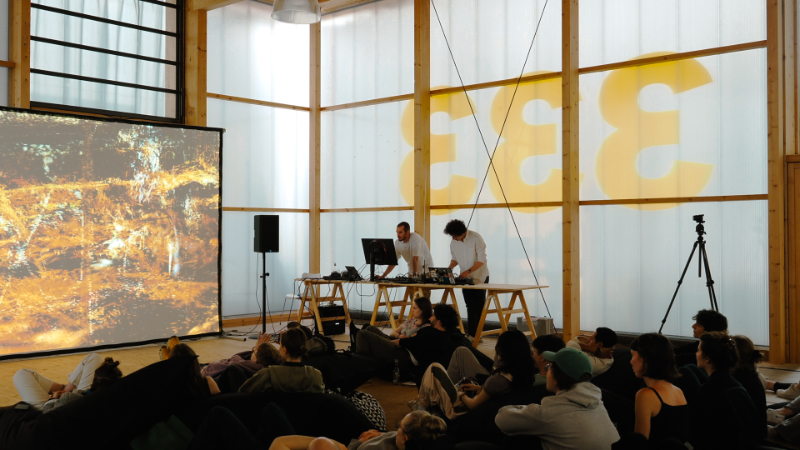
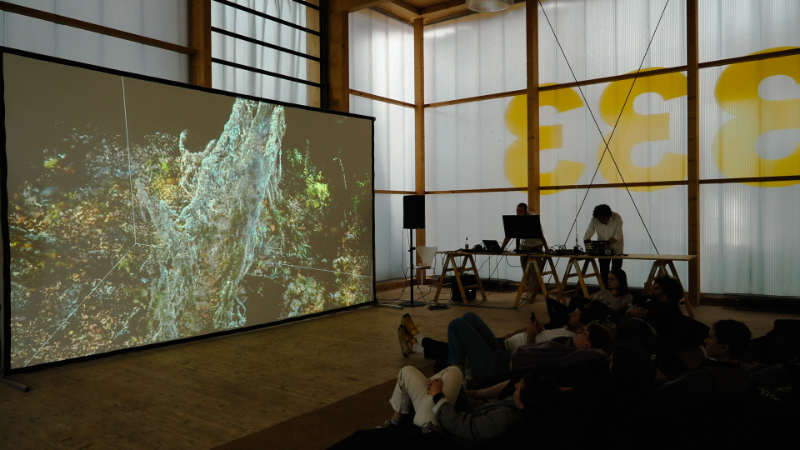
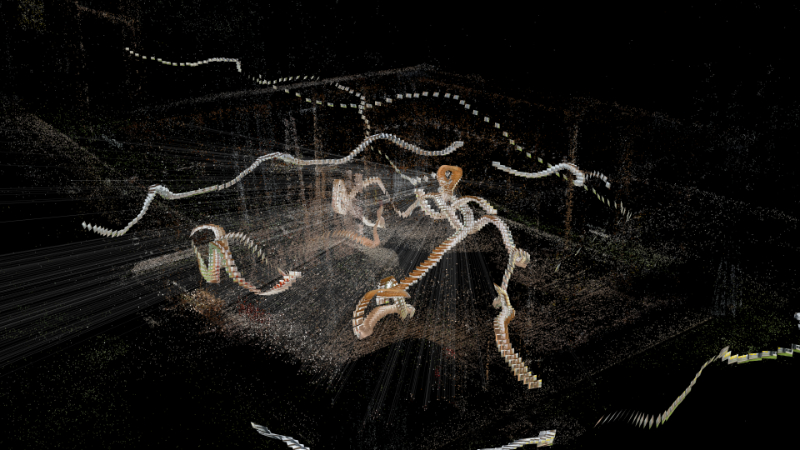
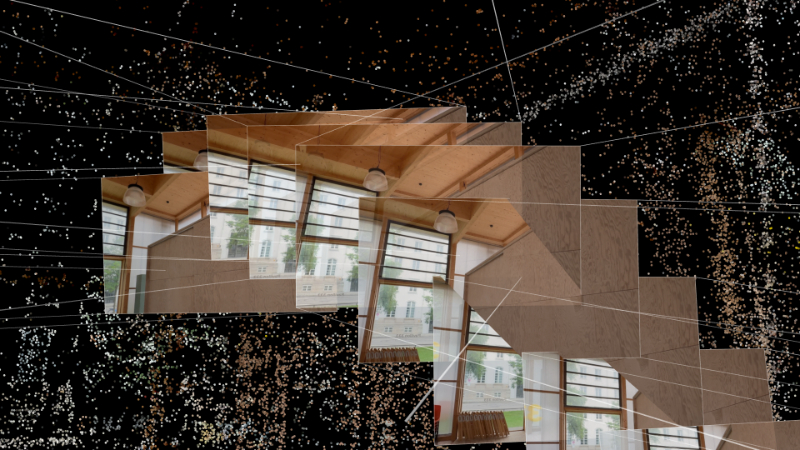 Our world is no longer solid, it avoids explicit connectivity. Instead it relies on soft blends of layers,
fractured and stitched together by unseen forces. Gaussian splats, cloudy and shifting, dissolve the rigid
airtight frames of reality.
The same world hums in radio waves. Signals coil and pulse, replaying in endless loops and are reflected
from the ionosphere. We decode. We overlay. We try to make sense of this immensely convoluted composition of
time, space, and interference. We invite you to look at the waves, to embrace the uncertainty, to find
comfort in the noise.
DOI was an audiovisual performance with Marco Pisano, at the occasion of the exhibition "Trees, Time,
Architecture" at Architekturmuseum der TUM. Special thanks to Kristina Pujkilovic.
16.06.2025 - 19:00 at Pavillon333, east side of the Pinakothek der Moderne.
06.09.2025 - 16:00 at Pinakothek der Moderne.
Photos: Kristina Pujkilovic
Our world is no longer solid, it avoids explicit connectivity. Instead it relies on soft blends of layers,
fractured and stitched together by unseen forces. Gaussian splats, cloudy and shifting, dissolve the rigid
airtight frames of reality.
The same world hums in radio waves. Signals coil and pulse, replaying in endless loops and are reflected
from the ionosphere. We decode. We overlay. We try to make sense of this immensely convoluted composition of
time, space, and interference. We invite you to look at the waves, to embrace the uncertainty, to find
comfort in the noise.
DOI was an audiovisual performance with Marco Pisano, at the occasion of the exhibition "Trees, Time,
Architecture" at Architekturmuseum der TUM. Special thanks to Kristina Pujkilovic.
16.06.2025 - 19:00 at Pavillon333, east side of the Pinakothek der Moderne.
06.09.2025 - 16:00 at Pinakothek der Moderne.
Photos: Kristina Pujkilovic
MOTOGAN (2023)
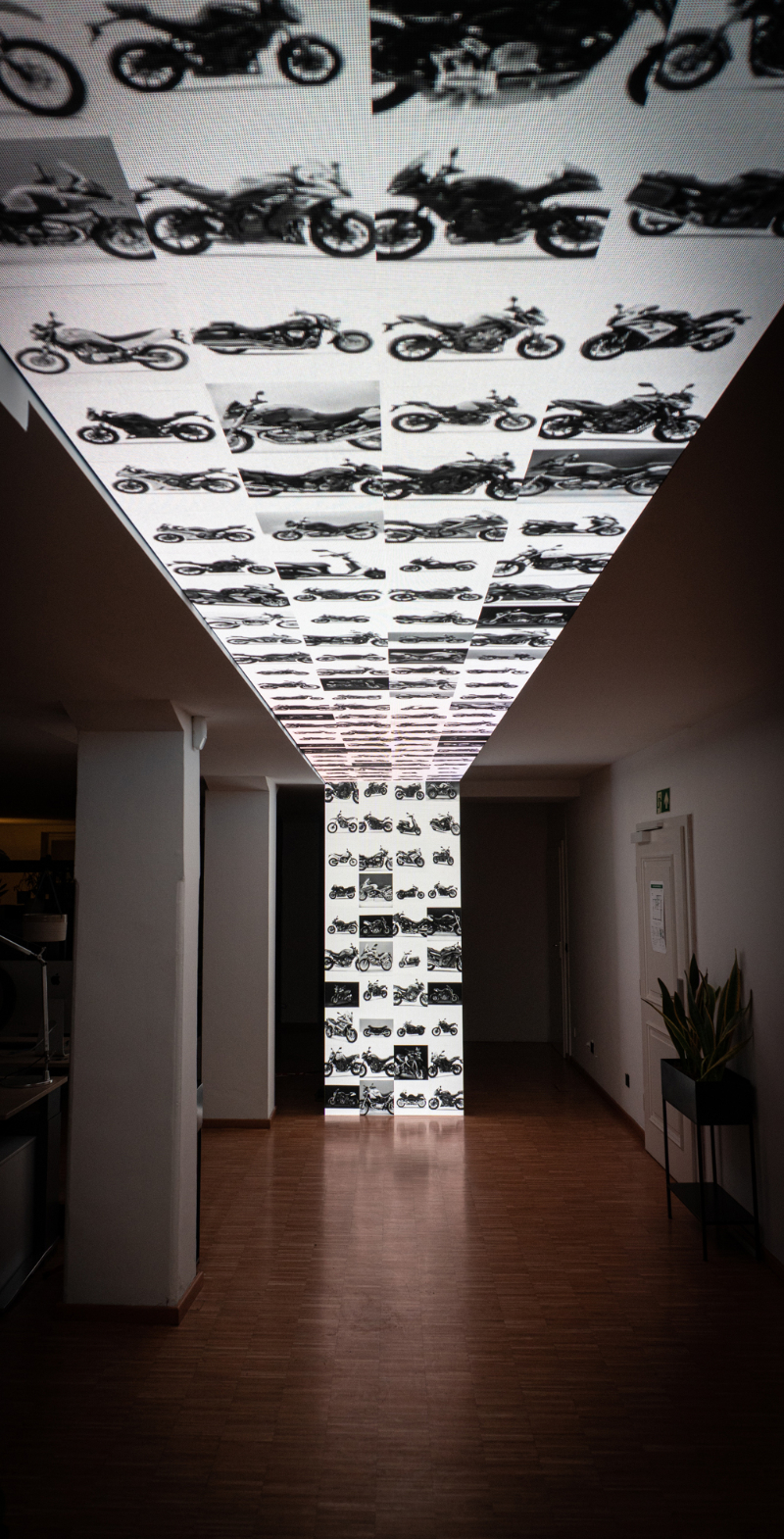
Embarking upon a curious expedition into the realm of transportation design, this AI-driven machine learning project titled Motogan (Motorrad Generative Adversarial Network) seeks to unravel the enigmatic essence of what constitutes a quintessential BMW motorcycle. By delving into the intricate subtleties and unique features that set various designs apart, Motogan aims to synthesize a wide range of hybrid motorcycle model images, drawing inspiration from diverse, iconic brands such as Yamaha, KTM, Ducati, and Kawasaki. Motogan helps us, human designers envision an experimental landscape where disparate components are meticulously grafted from one motorcycle to another, breeding a multitude of hybrids that exhibit unprecedented aesthetic and functional prowess. The machine learning-based images it generates traverse conventional design's boundaries. Morphologies of these speculative vehicles are shaped by the inventive interplay between the innate traits of currently existing motorcycle models. The dynamic synthesis model that Motogan operates on yields an evolutionary tree of images, blossoming with an array of vibrant branches that represent the countless possibilities forged by the harmonious melding of disparate design philosophies. As with any experiment in the laboratory of creative work, not all hybrid models appear to be impeccable. Some bear the burden of excessive mutation, their designs rendered desirable for a whimsical designer's imagination. Yet, this element of risk and uncertainty enriches the machinic output of Motogan with an exhilarating sense of discovery. This exploratory project serves as a testament to the boundless potential of AI-driven machine learning by melding the inimitable allure of BMW motorcycles with the distinctive design elements of other esteemed brands. Ultimately, Motogan strives to generate a cornucopia of innovative models that challenge the commands of convention and exceed the limits of our present-day imaginations for reshaping the very fabric of transportation design. In Collaboration with Marco Pisano and kontrastmoment. Project Text: Mehmet Ekinci
UEFA Europa League AFC Ajax analysis for Galatasaray SK
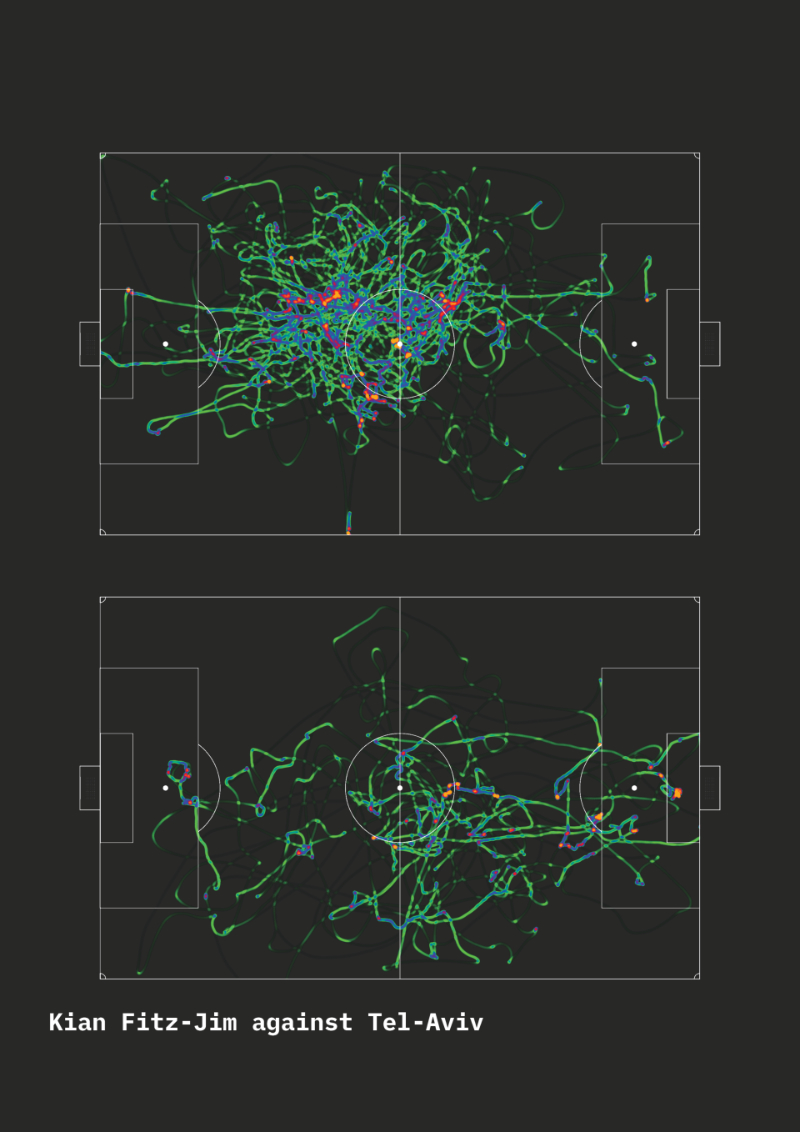
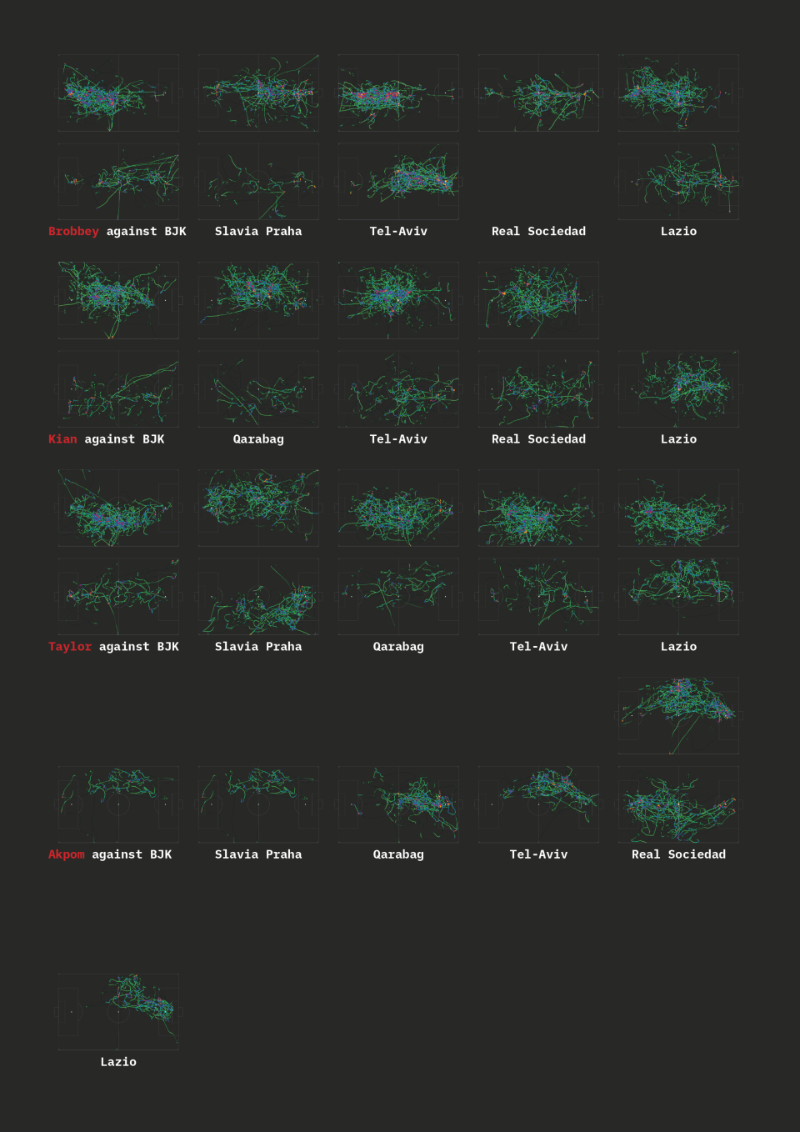
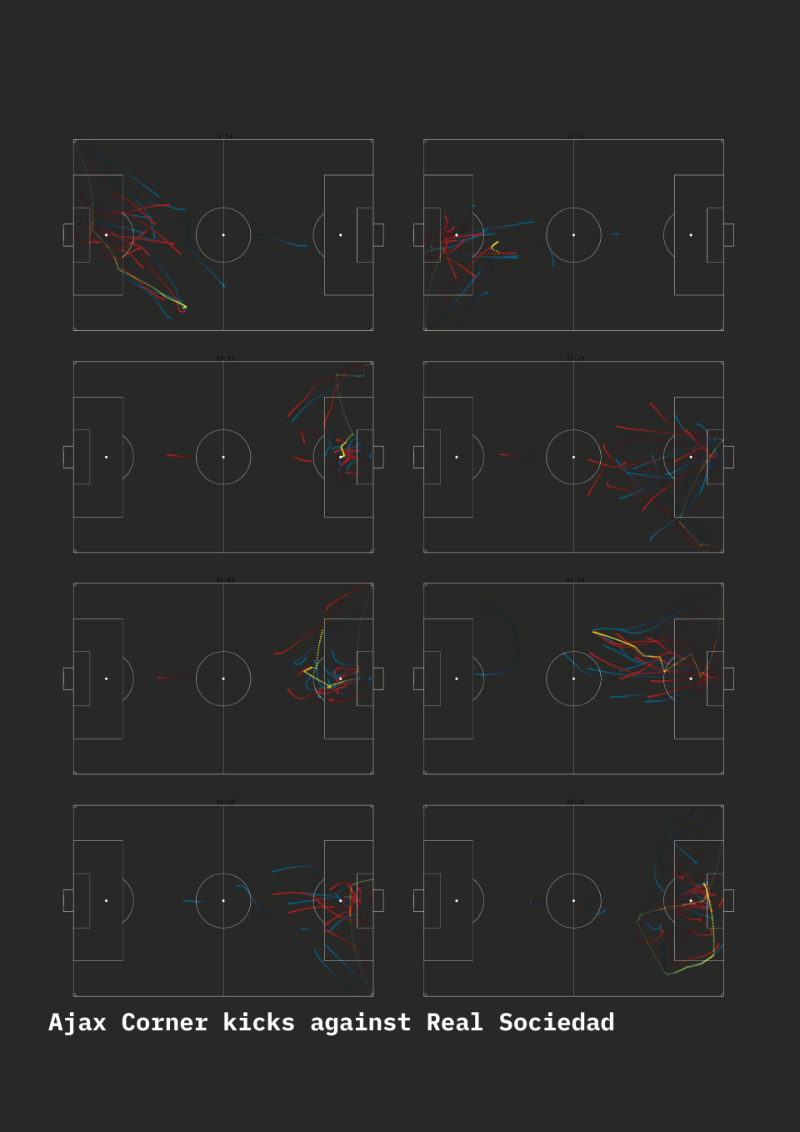
In December we started brainstorming with my old friend Ali Yavuz from Galatasaray S.K Match and Performance Analysis Team about how current football clubs use human performance measuring technologies, discussing the hidden potentials inside the available data. Together with Marco Pisano we deliberated for several days and focused on Galatasaray's next big UEFA Europa League opponent AFC Ajax. Within 2 weeks Marco was able to parse, synchronize multiple large data groups, animate and visualize the last 6 Europa League matches of AFC Ajax as well as track individual players and match events. With the help of Ali, we were able to focus and display the key player movements on the pitch and isolate critical moments such as corner & free kicks. We followed the 7 key players from Ajax: B. Traore, Kian Fitz-Jim, B. Brobbey, M. Godts, J. Hato, Kenneth Taylor and C. Akpom and were able to create multiple visualizations which allowed us to observe the key positional differences simultaneously within the last 6 matches. Finally we packed a 56 page document and delivered it to Ali 3 days before the kick-off. Of course the data analysis is just one tiny part of a football game and at the end of the day, each game is defined by a few spontaneous and inexplicable things that transpire on the pitch that cannot be mathematically explained. Congratulations to players Bertrand Traore and Kian Fitz-Jim for scoring 2 goals and good luck to both teams on their upcoming qualification matches. Finally I would like to thank Ali for the exciting collaboration and Marco for believing this experiment and for the sleepless hours he was spending on json files. We are always looking forward to collaborating, experimenting, and prototyping on new & interesting projects. Thanks, Onur. 13.02.2025 Update: Last weekend, we kept our eyes on the ball for the upcoming UEFA Europa League match of Galatasaray S.K and dove right into the "Event Data" of their opponent AZ Alkmaar. Departing from the research data which shows that just 2.2% of the corners end in goal, but that this goal is responsible for the team winning or drawing the match on 76% of occasions,[1] this week we focused on Corner and the Free-Kick formations. Here is just a snippet of the visualization that we delivered. Good luck to both AZ Alkmaar & Galatasaray S.K on today's match. [1] Casal, Claudio & Dios, Rubén & Ardá, Toni & Losada, José & Boubeta, Antonio. (2015). Analysis of Corner Kick Success in Elite Football. International Journal of Performance Analysis in Sport. 15. 10.1080/24748668.2015.11868805.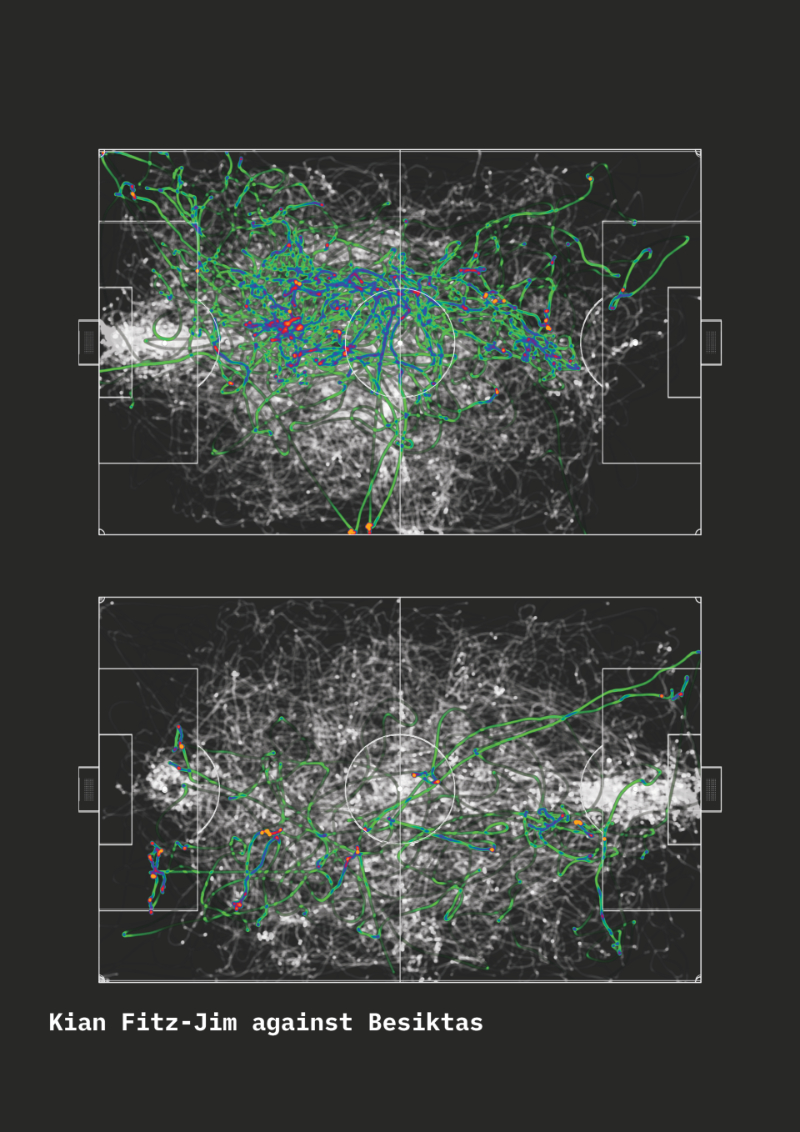
Bosch Design Studio
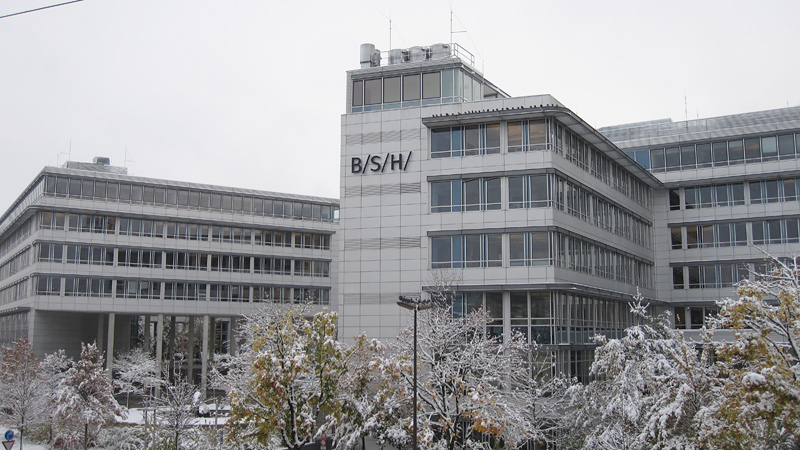 I was working at Bosch Design Studio (Bosch / Siemens Hausgeräte) in Munich, collaborating with product
designers about the research and design of new interfaces and style guides.
I can't post or discuss about the projects because of my confidentiality agreement.
I was working at Bosch Design Studio (Bosch / Siemens Hausgeräte) in Munich, collaborating with product
designers about the research and design of new interfaces and style guides.
I can't post or discuss about the projects because of my confidentiality agreement.
Hero
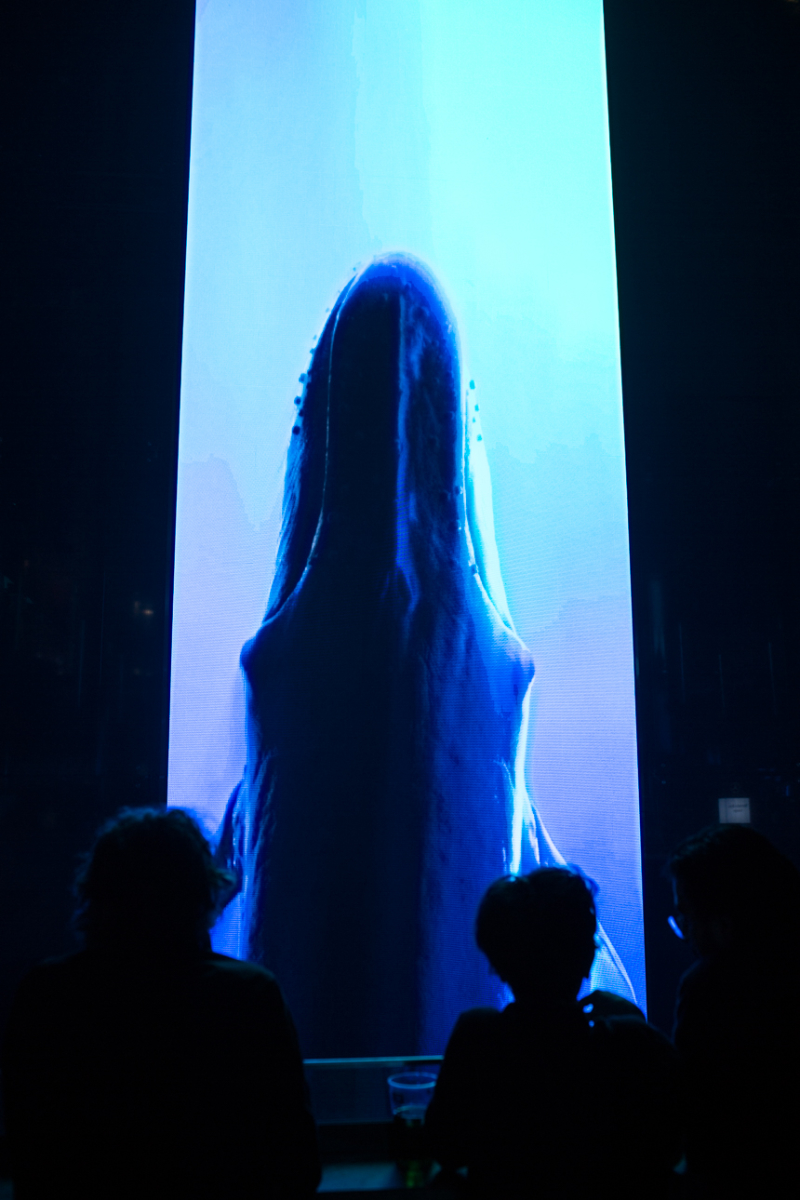
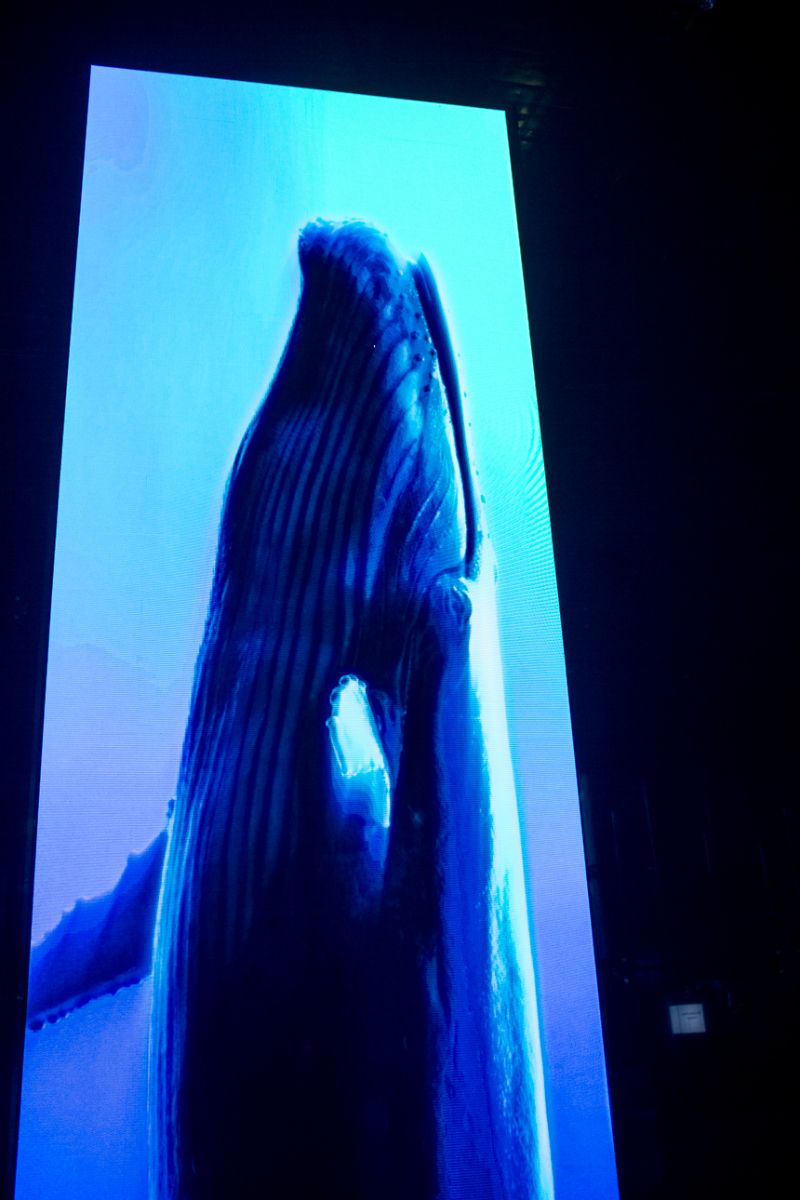
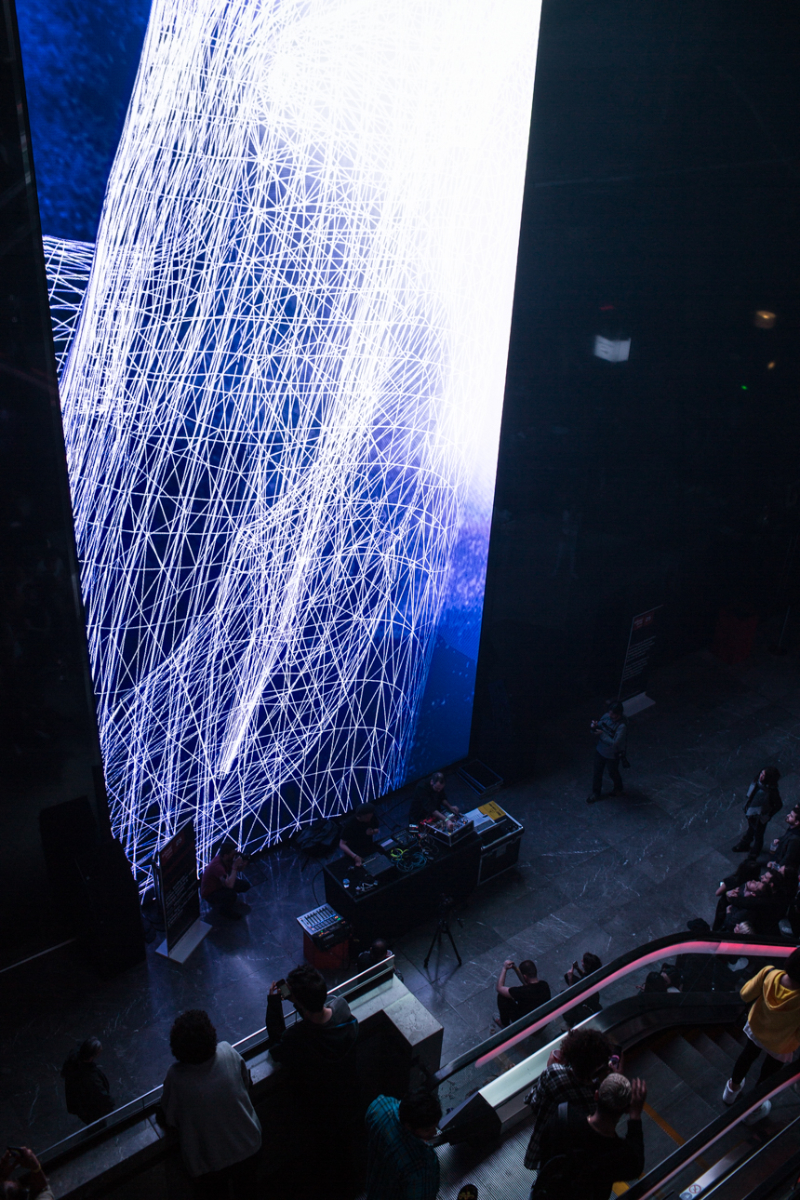
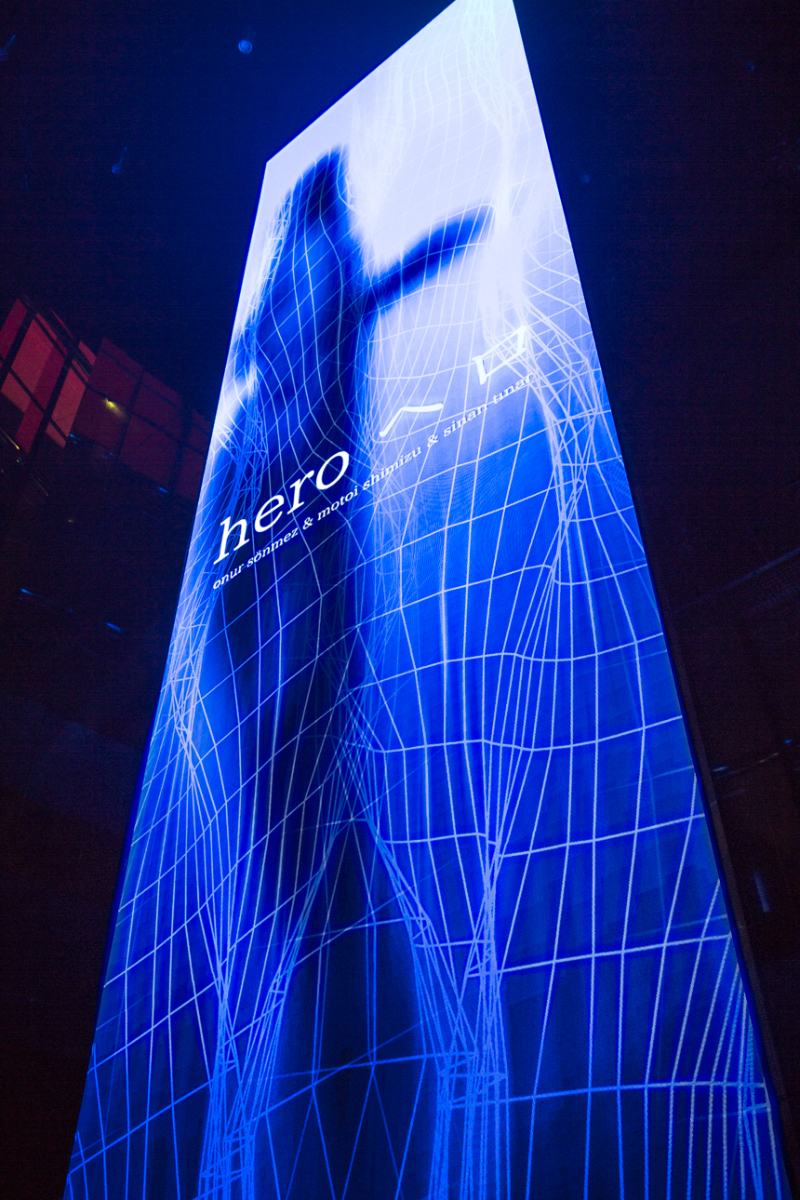
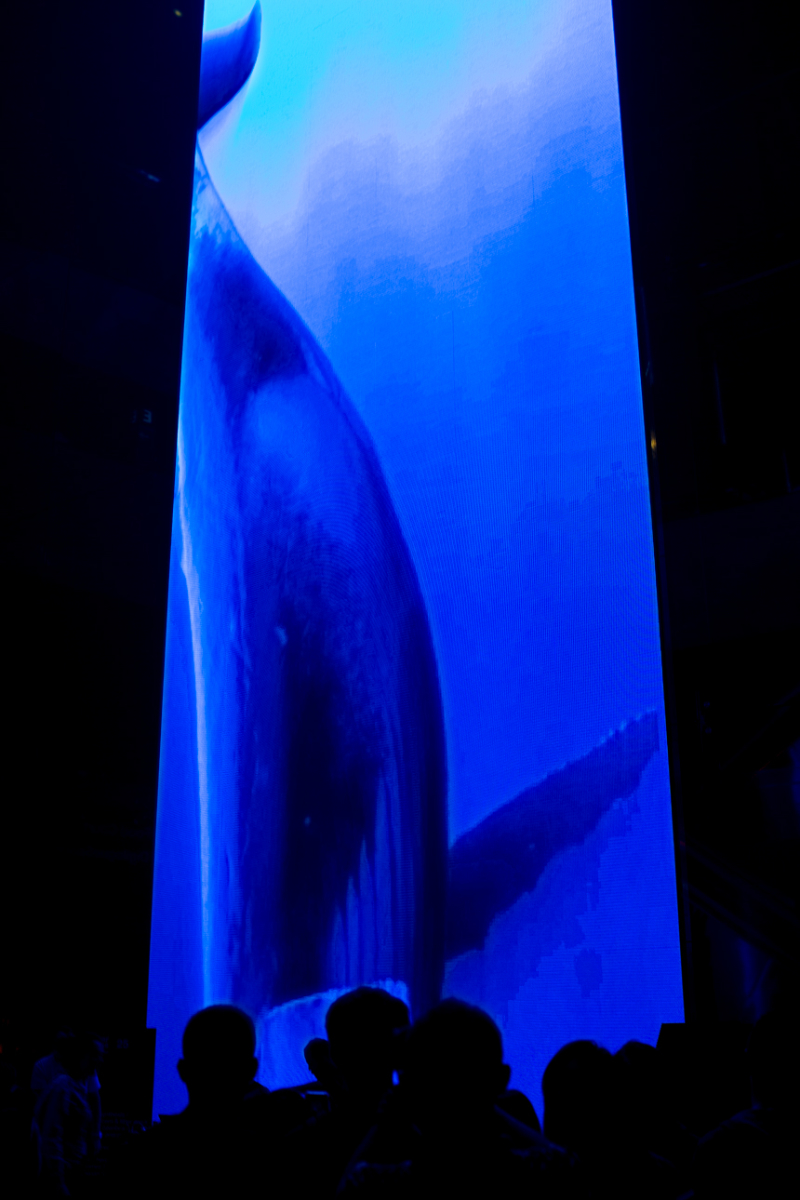
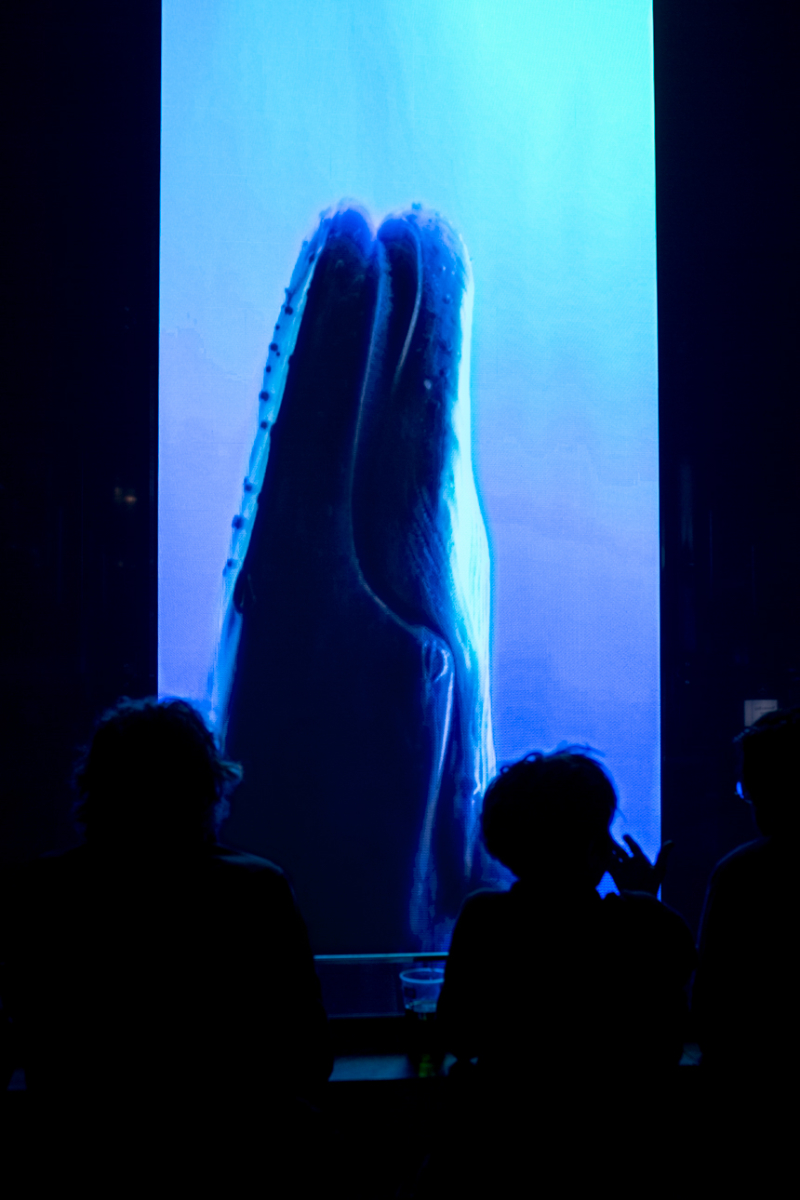
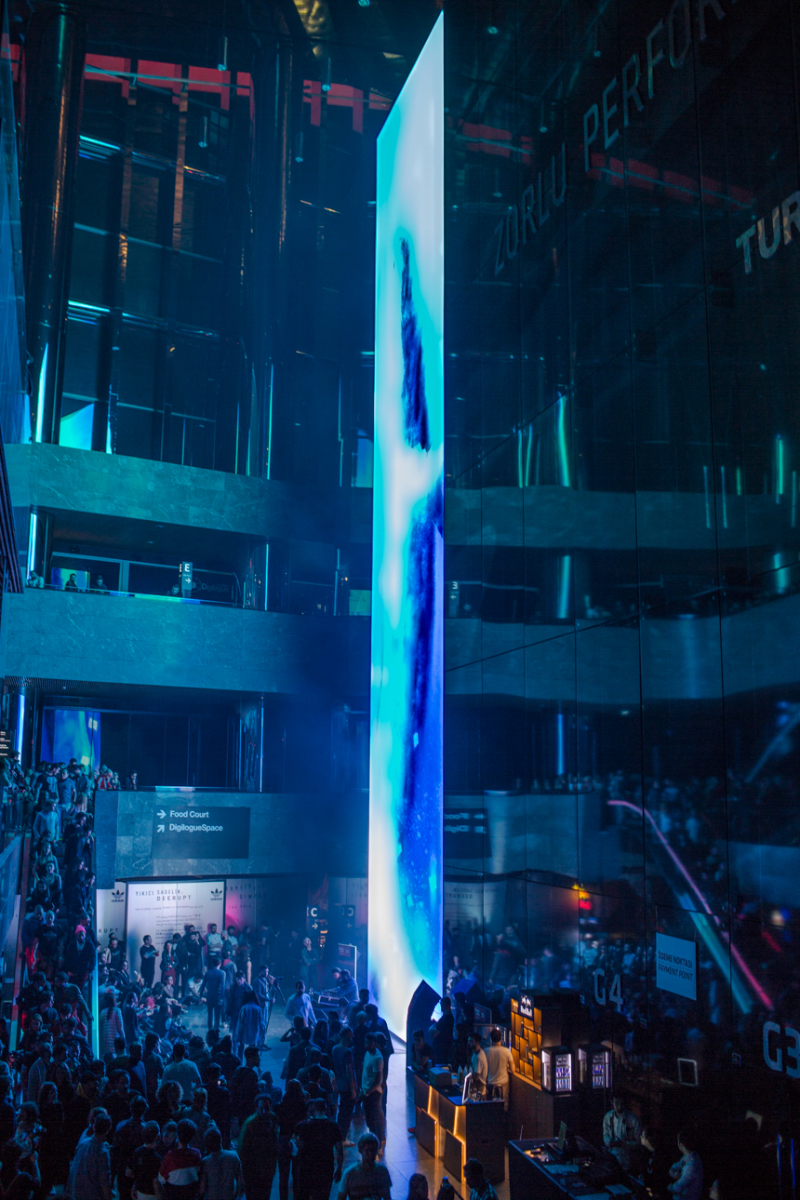
Hero is a 15 minute site specific installation / performance for the 24 meter display of Zorlu PSM Istanbul and our second intercontinental collaboration. We have all been swallowed into the belly of the whale at some point in our lives. Motoi experienced the mind blowingly beautiful scene of a whale breaching out of the water off the coast of Réunion Island last summer. I've experienced the belly of the whale in Istanbul in October 2015. All we wanted to do was to share our relaxing, abstract memories instead of an exhausting high-tech, shiny digital art. Hero represents a calm transformation process. A necessary, sometimes dark and difficult step for us to face before continuing our journey towards unity. In collaboration with Motoi Shimizu & Sinan Tinar for Sonar+D Istanbul 2018 - 6-7 April 2018.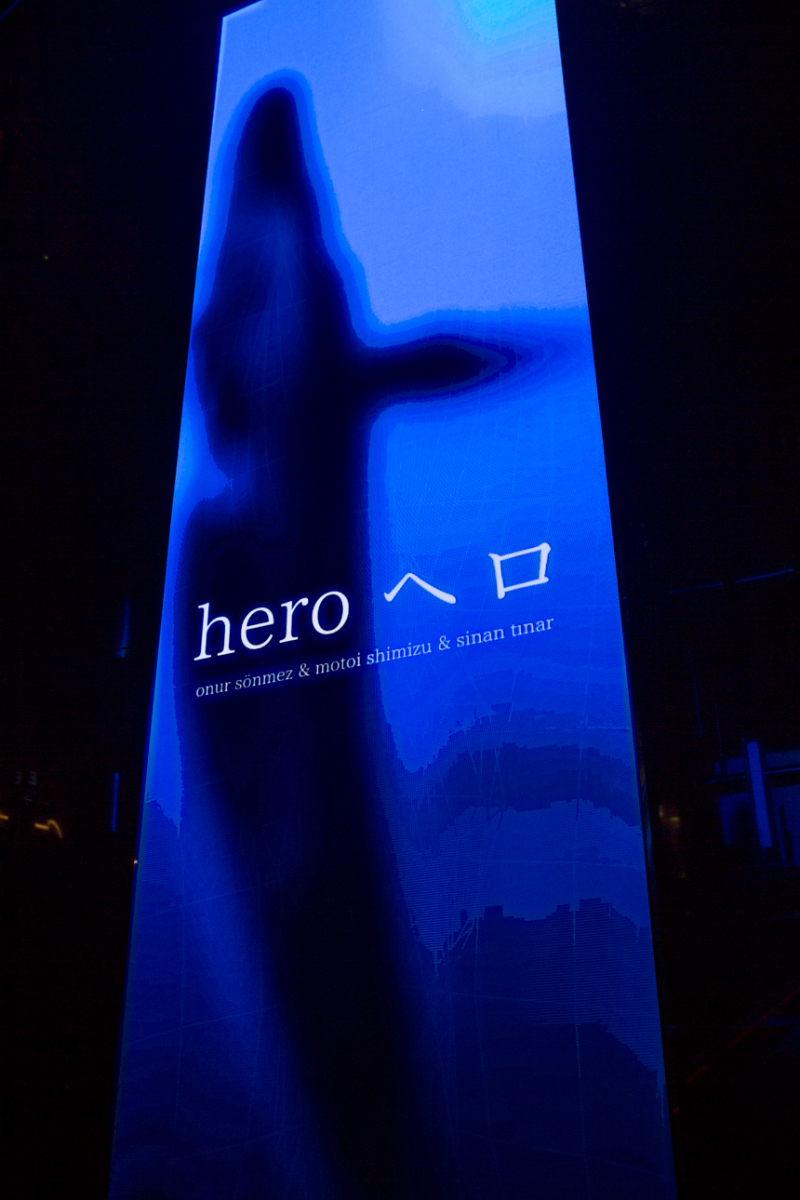
NOX
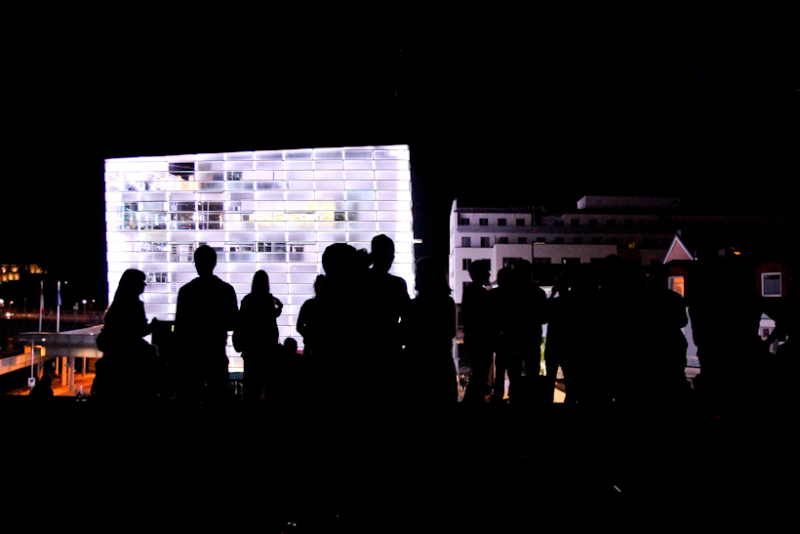
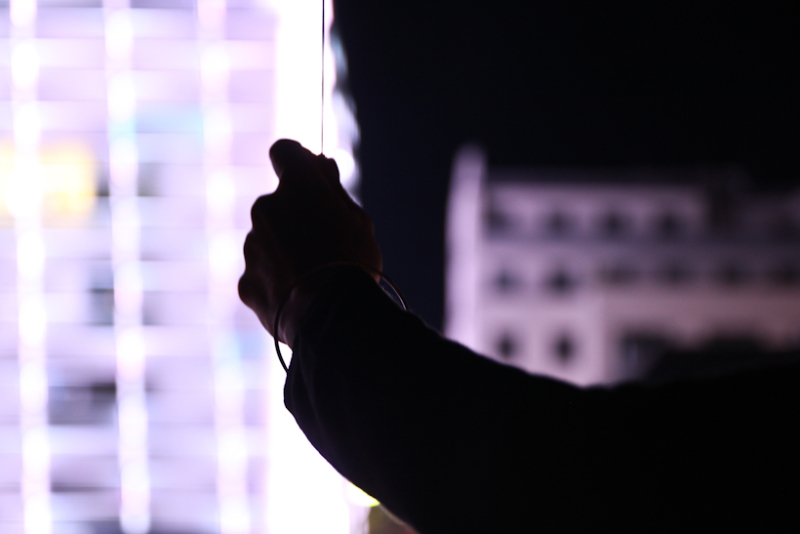
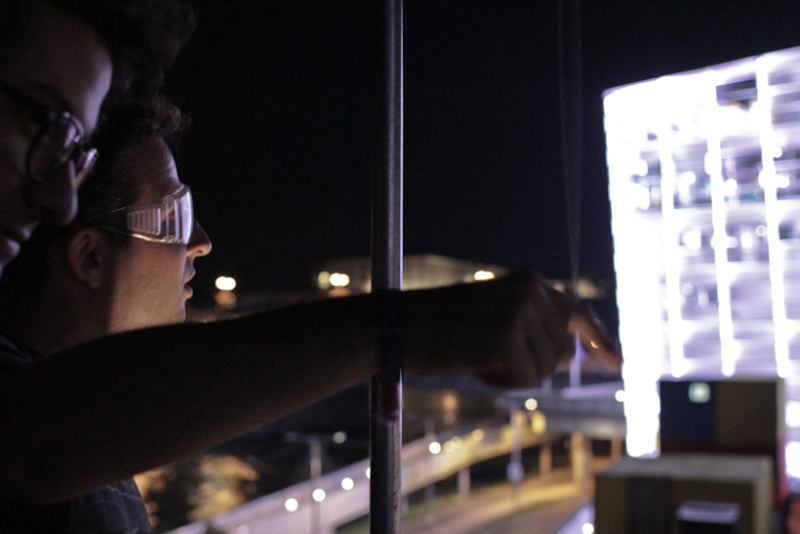
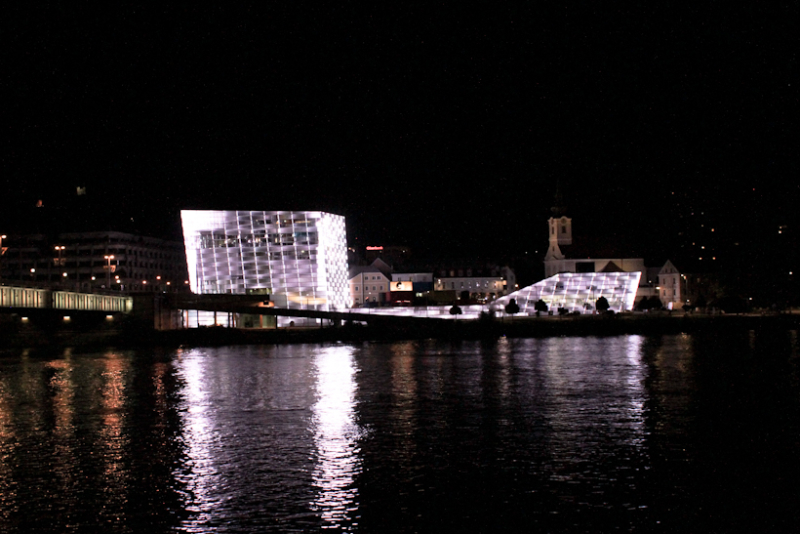
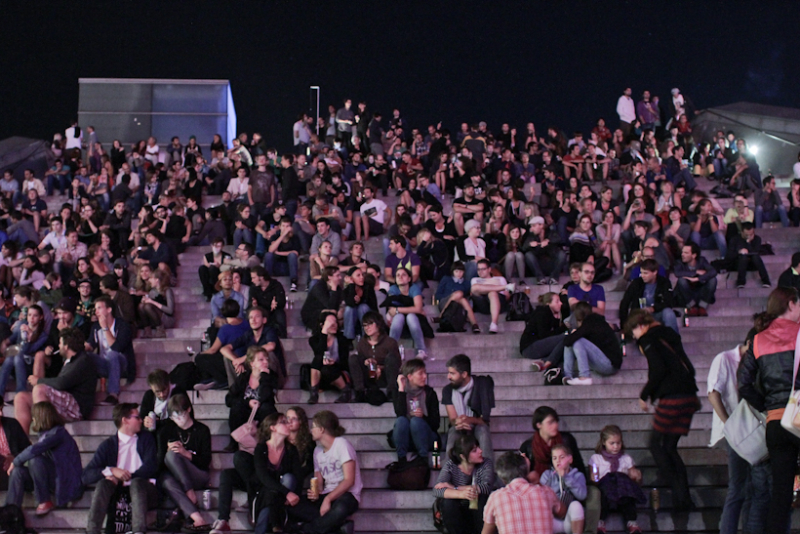
NOX is an interactive architectural installation for Ars Electronica; that facilitates a tangible relationship between people and urban landscape. Through a simple pull switch, like the one in a night lamp, NOX gives the control of a new media facade to the public, questioning the power relations in public spaces. Through this widely adopted haptic interface, the public is given back the control of enabling or disabling the facade, rendering the true function of the building obsolete. Onur Sönmez & Tamer Aslan 07.09.2013 23:00 Ars Electronica 2013 Special thanks: Jaak Kaevats, Ebru Kurbak, Patrick Müller, Veronica Pauser, Fino Poly, Katerina Pushkin, Erwin Reitböck, Konrad Storost.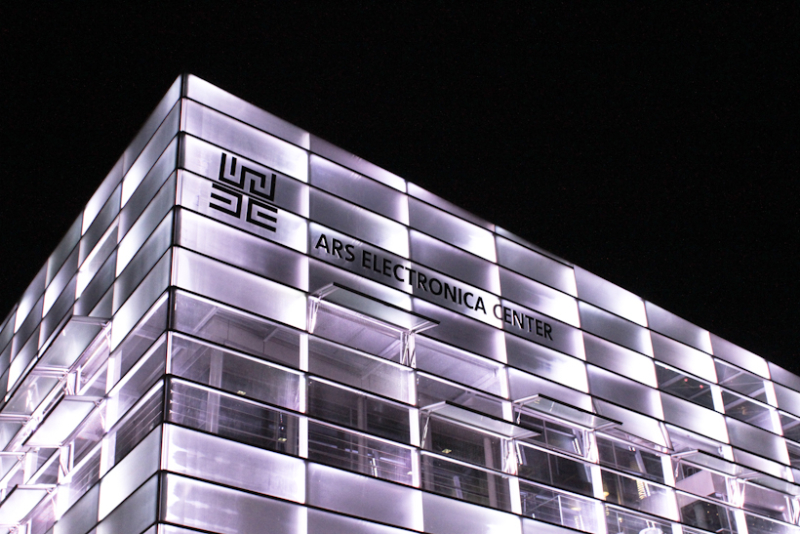
Prothesengott (2017)
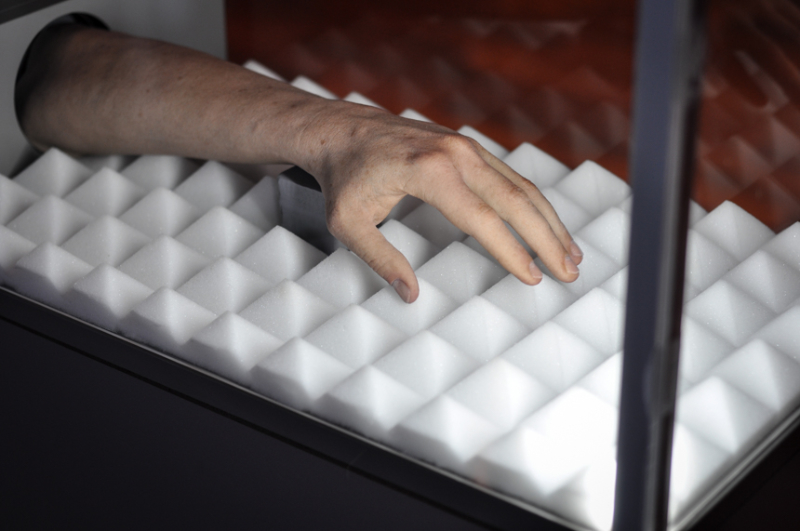 Prothesengott is a prototype that shifts between animate and inanimate states of being according to the
presence or absence of other animate things within its socio-technologically defined perimeter. It is the
first version of a technological system, recursive in terms of its actual capabilities and open-ended in
terms of its future potentialities.
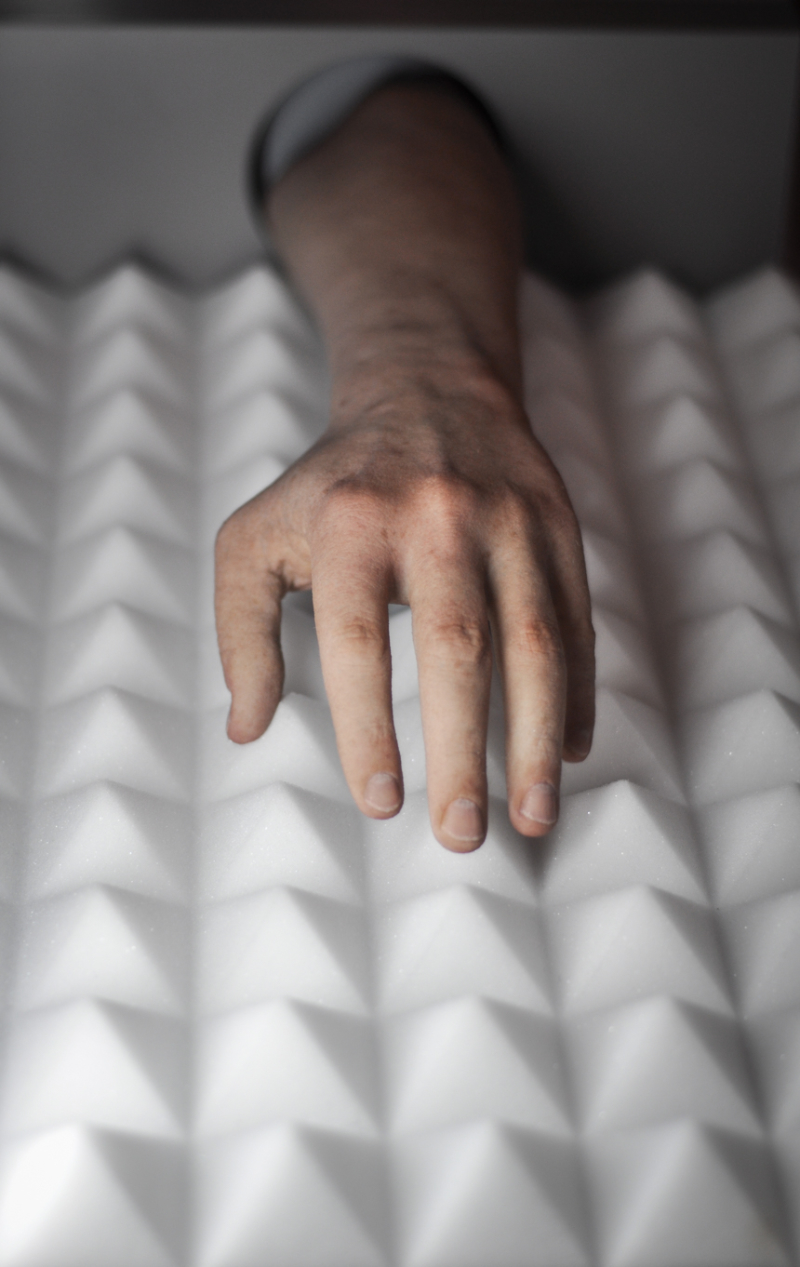
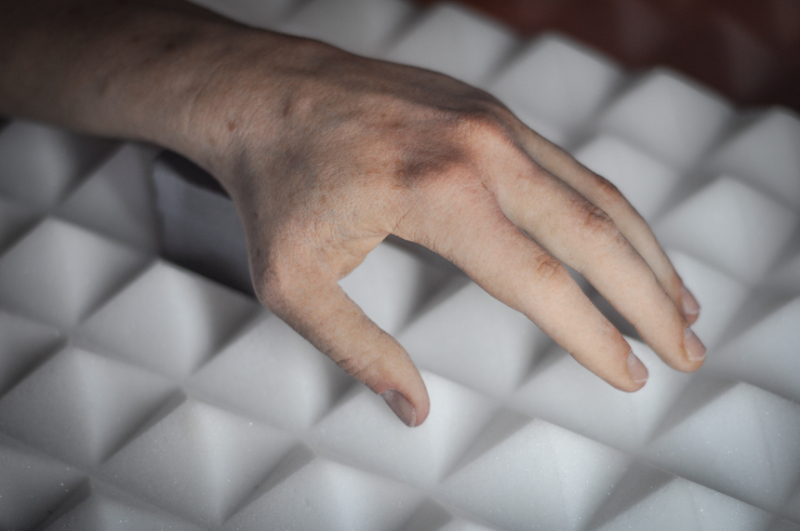
By utilizing an invisible microwave sensor and an embedded vibrational motor, Prothesengott operates as a
proof-of-principle prototype of a future technology. In its immediate appearance it is a reactive
technology, a prosthetic device with an eerie alien hand syndrome, whose modality is defined on the
principle of getting animated by detecting its subjects in motion and under its radar: a dismembered hand of
a sentinel or a prosthetic tool for a cyborg to be.
Taking its name from Sigmund Freud and his discussion on the limited nature of the human being, always
situated within particular material conditions, Prothesengott revisits the issue of ''the prosthesis'' which
was taken up by various philosophers, media theorists, artists and science studies scholars of the 20th
century. According to such scholars, the physical boundary which set the internal/external attributions of
the human bodies gets blurred as these bodies' capacities are enhanced or diminished via their
(dis)articulations with (or from) certain infrastructures, tools or techniques; in other words, a varied set
of prosthetic devices.
Prothesengott reconfigures ''the physicality of media extensions'' by setting up a stage where the sheer
presence of human bodies enables a technological system to manifest itself to its spectators without giving
away the basic mechanics of such manifestation. The microwave sensor concealed within its apparatus detects
the body motions around it and gets animated. It takes a while for us to understand that we ''touch''
microwaves radiated from Prothesengott. A particular kind of haptic technology gets deployed via prosthetic
means invisible to the naked human eye.
This prototype bears its analytical power within its minimalist and open-ended design in terms of
sociotechnical imaginaries and future narratives which we can derive from it. What techno-scientific and
social orders have been and will be co-produced as concrete effects of interactions between technological
artefacts and humans? In addition to its physically bounded setup and immediate interplay between bodies and
its apparatus, Prothesengott symbolizes the wide range of indeterminate relations between humans and
technological systems. Putting an emphasis on the indeterminate nature of relationality between humans and
technological systems should not be interpreted as a denial of the fact that there is a technical design
process behind the social construction of Prothesengott. The way this prototype works enchants, awes or
maybe frightens its spectators who become part of its technological manifestation and deconstructing it -as
we do it in this text- has a clear disenchanting effect.
This effect of disenchantment paves the way for asking further questions such as: What other technological
systems get animated or put into dormant phase by the social, technological and ecological forces of our
contemporary world? Given such interactions' complexities, to what degree and for what purposes rendering
these indeterminate relations between humans and technological systems visible for social attestation
matters? Freud calls modern humans as ''prosthetic Gods'' and he reflects on their discontents about the
civilization they built and/or resisted to. Almost a century after Freud wrote this text, we deal with
another set of uneasy questions that cutting-edge technologies of our times bring onto surface -via
entangled applications of synthetic biology, robotics, neuroscience and applied physics- either in realistic
or speculative terms. It is anticipated that these technological systems will generate their own discontents
in the near future. These questions remind us that the deity-like characteristics of Prothesengott are based
on certain cultural ideals and modern techniques envisioned by them. Factors of indetermination of the
unanticipated consequences of new technologies should not downplay the importance of the question of ''the
social.'' Prototypes such as Prothesengott carve out a platform of discussion about social, cultural,
political, economic and ethical implications of new technologies. Its minimalist and open-ended design
provides us multiple venues for imagining future generations who do not worship the technological systems
they take a major part to give shape, modify and if necessary, resist to.
Onur Sönmez and Mehmet Ekinci
for Digi.logue - Futuretellers Exhibition. September 2017, Istanbul.
Prothesengott is a prototype that shifts between animate and inanimate states of being according to the
presence or absence of other animate things within its socio-technologically defined perimeter. It is the
first version of a technological system, recursive in terms of its actual capabilities and open-ended in
terms of its future potentialities.
By utilizing an invisible microwave sensor and an embedded vibrational motor, Prothesengott operates as a
proof-of-principle prototype of a future technology. In its immediate appearance it is a reactive
technology, a prosthetic device with an eerie alien hand syndrome, whose modality is defined on the
principle of getting animated by detecting its subjects in motion and under its radar: a dismembered hand of
a sentinel or a prosthetic tool for a cyborg to be.
Taking its name from Sigmund Freud and his discussion on the limited nature of the human being, always
situated within particular material conditions, Prothesengott revisits the issue of ''the prosthesis'' which
was taken up by various philosophers, media theorists, artists and science studies scholars of the 20th
century. According to such scholars, the physical boundary which set the internal/external attributions of
the human bodies gets blurred as these bodies' capacities are enhanced or diminished via their
(dis)articulations with (or from) certain infrastructures, tools or techniques; in other words, a varied set
of prosthetic devices.
Prothesengott reconfigures ''the physicality of media extensions'' by setting up a stage where the sheer
presence of human bodies enables a technological system to manifest itself to its spectators without giving
away the basic mechanics of such manifestation. The microwave sensor concealed within its apparatus detects
the body motions around it and gets animated. It takes a while for us to understand that we ''touch''
microwaves radiated from Prothesengott. A particular kind of haptic technology gets deployed via prosthetic
means invisible to the naked human eye.
This prototype bears its analytical power within its minimalist and open-ended design in terms of
sociotechnical imaginaries and future narratives which we can derive from it. What techno-scientific and
social orders have been and will be co-produced as concrete effects of interactions between technological
artefacts and humans? In addition to its physically bounded setup and immediate interplay between bodies and
its apparatus, Prothesengott symbolizes the wide range of indeterminate relations between humans and
technological systems. Putting an emphasis on the indeterminate nature of relationality between humans and
technological systems should not be interpreted as a denial of the fact that there is a technical design
process behind the social construction of Prothesengott. The way this prototype works enchants, awes or
maybe frightens its spectators who become part of its technological manifestation and deconstructing it -as
we do it in this text- has a clear disenchanting effect.
This effect of disenchantment paves the way for asking further questions such as: What other technological
systems get animated or put into dormant phase by the social, technological and ecological forces of our
contemporary world? Given such interactions' complexities, to what degree and for what purposes rendering
these indeterminate relations between humans and technological systems visible for social attestation
matters? Freud calls modern humans as ''prosthetic Gods'' and he reflects on their discontents about the
civilization they built and/or resisted to. Almost a century after Freud wrote this text, we deal with
another set of uneasy questions that cutting-edge technologies of our times bring onto surface -via
entangled applications of synthetic biology, robotics, neuroscience and applied physics- either in realistic
or speculative terms. It is anticipated that these technological systems will generate their own discontents
in the near future. These questions remind us that the deity-like characteristics of Prothesengott are based
on certain cultural ideals and modern techniques envisioned by them. Factors of indetermination of the
unanticipated consequences of new technologies should not downplay the importance of the question of ''the
social.'' Prototypes such as Prothesengott carve out a platform of discussion about social, cultural,
political, economic and ethical implications of new technologies. Its minimalist and open-ended design
provides us multiple venues for imagining future generations who do not worship the technological systems
they take a major part to give shape, modify and if necessary, resist to.
Onur Sönmez and Mehmet Ekinci
for Digi.logue - Futuretellers Exhibition. September 2017, Istanbul.
onursonmez.com